
Productos
Fabricante profesional de cajas de distribución de cables que garantiza un suministro de energía confiable
A Cable Distribution Box is one of the main products of Cotenele Electric Company. The Cable Distribution Box we produce has a small volume, compact structure, high protection level, and is sturdy and durable. A Cable Distribution Box is an electrical equipment used in power distribution networks to implement tapping, branching, splicing, and conversion circuits for cable lines. It is one of the core equipment in distribution network cabling engineering, and its main function is to distribute the electrical energy of the main cable to multiple branches, providing stable and reliable power supply for various types of electrical equipment.
The cable distribution box is widely used in urban distribution network renovation, industrial communities, residential areas, commercial centers, wind power plants, photovoltaic power generation bases and other scenarios, which can greatly save electrical equipment and cable investment and improve power supply reliability.

nuevos productos
- Sistema aislado de gas de media tensión de 33 kV
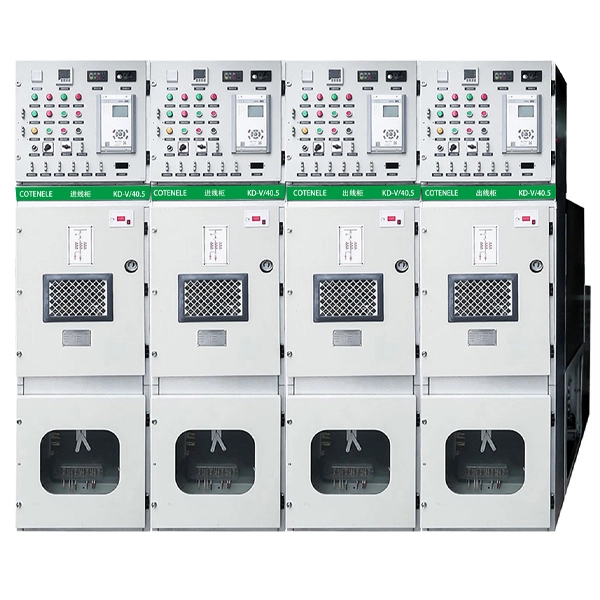
- Paneles eléctricos RMU de media tensión de 11KV
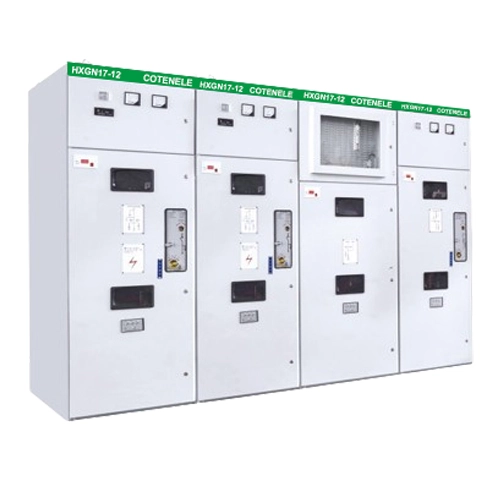
- Paneles MV de unidad principal de anillo de media tensión de 11KV
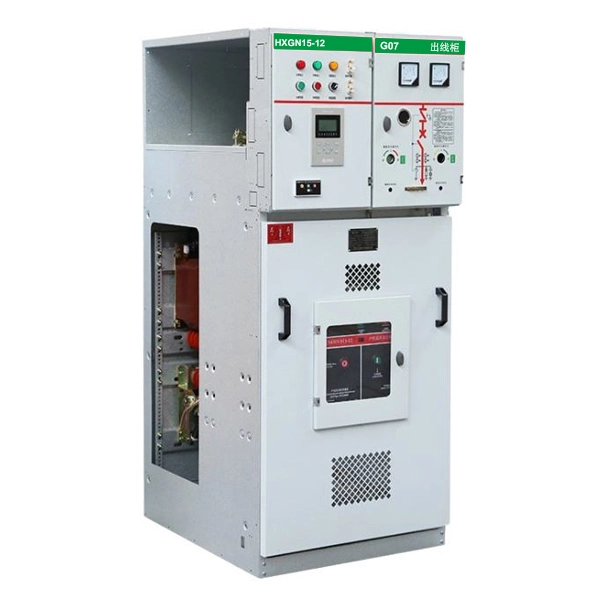
- Aparamenta de distribución aislada en gas de media tensión de 11 kV
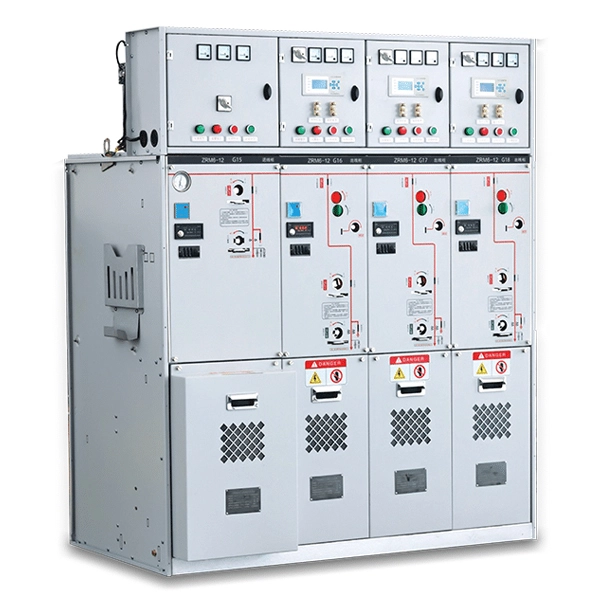
- Aparamenta de media tensión revestida de metal para interiores de 11 kV
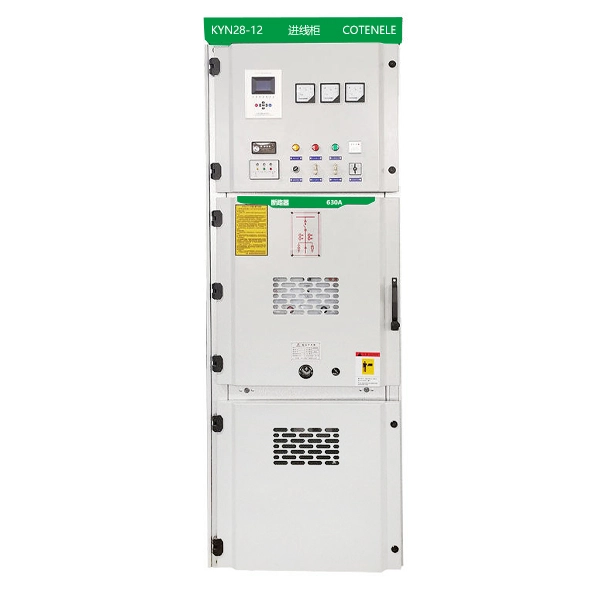
- View as

Caja de distribución de cables para exteriores
Caja de distribución de cables para exteriores tipo Cotenele DFWK Adopta cabezales de cables prefabricados de caucho de silicona táctiles, completamente sellados, completamente aislados, sin mantenimiento y confiables para garantizar la seguridad personal; Estructura compacta, apariencia compacta y hermosa, caja de doble capa de acero inoxidable, con una vida útil de más de 20 años; Sin afectar el funcionamiento de la red principal. Implementar mantenimiento regional de cortes de energía para reducir el alcance de los cortes de energía; Puede equiparse con uno o más interruptores-seccionadores en carga SF6. Los métodos de cableado son flexibles y diversos, con un máximo de ocho ramales; Pararrayos opcionales, indicadores de fallas de cortocircuito, fusibles limitadores de corriente, etc., están disponibles para satisfacer diversos requisitos de los usuarios.

Dispositivo de distribución de distribución de cable de caja de unión eléctrica de 33KV
En el sistema de distribución de 33kV, el tablero de distribución de cables de caja de conexiones eléctricas de 33KV es un equipo eléctrico muy importante, y Cotenele es un excelente representante de la producción de este equipo. Nuestro tablero de distribución de cables de estilo europeo se usa ampliamente en ingeniería de cables en sistemas de redes de distribución de energía. Sus características principales son la apertura bidireccional de las puertas, el uso de manguitos pasantes de pared como barras colectoras de conexión y ventajas significativas como la estructura compacta, la disposición clara de los cables y la ausencia de la necesidad de cruzar grandes tramos de cables de tres núcleos.

Panel de distribución de cable de unión de caja de cableado de 22 KV
Cotenele es un gran fabricante de cajas de derivación de cables de media tensión, el panel de distribución de cables de unión de cajas de cableado de 22 KV fabricado por nosotros ha exportado muchos países y áreas de ultramar. El panel de distribución de cables de conexiones de cajas de cableado de 22 KV es un dispositivo de nodo clave en las redes de distribución de energía, utilizado principalmente para la transferencia y distribución de energía. Se aplica ampliamente en proyectos de cableado urbano y suministro de energía residencial. Presenta características de aislamiento total, sellado total y sin mantenimiento.

11KV fuera de la caja de terminación de cable del gabinete de conexiones eléctricas
Cotenele es un importante proveedor de equipos de ingeniería de cables en el sistema de red de distribución de energía de China. Nuestra caja de terminación de cables para gabinete de conexiones eléctricas exteriores de 11 KV de estilo europeo se ha utilizado ampliamente en proyectos de ingeniería de sistemas de distribución de State Grid en los últimos años. Las características principales del gabinete de conexiones eléctricas exteriores son la apertura bidireccional de las puertas, el uso de manguitos pasantes de pared como barras colectoras de conexión y las ventajas significativas, como una longitud pequeña, una disposición clara de los cables y la ausencia de la necesidad de un cruce de cables de tres núcleos de gran envergadura.

Caja de distribución de bajo voltaje
Cotenele es un gran fabricante de cajas de distribución de baja tensión. Nuestras cajas de distribución de bajo voltaje no solo tienen una alta participación de mercado en China, sino que también exportan a mercados extranjeros, especialmente en África y América del Sur. En Europa, hemos establecido una cooperación estable y a largo plazo con algunos agentes griegos. La caja de distribución de bajo voltaje es un eslabón crítico en el sistema eléctrico, ya que suministra energía desde la red principal hasta los equipos de uso final. Puede considerarse la puerta de entrada final para la distribución de energía. Nuestras cajas de distribución de bajo voltaje cumplen con los estándares internacionales relevantes, por ejemplo, IEC 61439.
What Is A Cable Distribution Box?
A Cable Distribution Box (Cable Branch Box) is a device used for tapping, branching, connecting, and converting circuits on cable lines, mostly installed outdoors.
In power systems, the Cable Distribution Box serves tapping, branching, relaying, or converting functions, connecting power cables with equipment such as compact substations, load break switches, fuse-switch combinations, and ring main units, greatly facilitating cable network construction. Cable Distribution Boxes are mainly used in power systems with a rated frequency of 50Hz/60Hz and rated voltages of 380V (660V). They are also widely used in 10kV and 35kV medium-voltage distribution networks.
The core functions of a cable branch box include:
1. Cable tapping: On a long distribution line, using multiple small cross-section cables directly would be wasteful. Therefore, a large main cable is used at the output end, and near the loads, a Cable Distribution Box divides the main cable into several small cross-section cables that connect to the loads. This connection method is widely used in street lighting power supply and small-user power supply in urban grids.
2. Cable transitioning: When the distribution distance exceeds the length of a single cable, cable joints or transition boxes are necessary. Using many intermediate joints on a long cable line can create safety hazards, so using a Cable Distribution Box for transition is safer and more reliable. In addition, The Cable Distribution Boxes facilitate the connection of cables with different cross-sections, eliminating the complex process of intermediate cable joints, improving the cable connection environment, and facilitating routine inspection and maintenance during operation.

Classification For Cable Distribution Boxes
Cable Distribution Boxes can be classified from multiple dimensions as follows.
1. By Electrical Composition
l Ordinary distribution box: Contains no switching devices, only accessories for terminating and connecting cable ends. Simple structure, small size, single function-suitable only for tapping or branching. The total number of incoming and outgoing circuits is often called the number of branches. For example, a three-branch Cable Distribution Box can be used as one incoming with two outgoing, or two incoming with one outgoing.
l Advanced distribution box: Contains one or more switching devices, which can perform tapping, branching, as well as circuit control, conversion, and operation mode changes. Complex structure, larger size-typical external dimensions: height 1.4~1.8m, depth about 0.9~1.0m, length varies with number of switching devices. The enclosure resembles an outdoor pad-mounted transformer, with several doors- some for switch operation, others for installation and maintenance of cable connectors.
2. By Voltage Level
Rated voltages: 12kV (10kV), 24kV, 40.5kV (35kV), etc.
3. By Structure and Cable Connector Type
Mainly divided into three types: American-type (dead-front), European-type, and switch-equipped Cable Distribution Boxes.
| Feature | European Type | American Type | Switch-equipped Type |
| Door opening | Two-way | One-way | Depends on design |
| Connection method | Double-bushing as busbar | Horizontal multi-way busbar | Contains switching devices, allows loadoperation |
| Main circuit current | 630A | 600A | Depends on configuration |
| Branch circuit current | Depends on configuration | 200A(plug-in) | Depends on configuration |
| Connector standard | DIN47636 | IEEE 386 | Compliant with GB/IEC |
| Main features | Short length, neat cable arrangement, nolarge span crossing for three-core cables | Narrow width, flexible combination, fullyinsulated, fully sealed | Circuit control and conversion |
4. By Enclosure Material
- Metal: Cold-rolled steel, 201 stainless steel, 304 stainless steel, etc.
- Non-metal: SMC (Sheet Molding Compound) and other composites-good insulation and corrosion resistance.
5. By Installation Method
Outdoor floor-mounted, wall-mounted, buried type (fully insulated, fully sealed, fully enclosed -installed in cable trenches, occupying no ground space), etc.

Application Scope of Cable Distribution Box
Cable Distribution Boxes are widely used in various fields of power distribution networks:
1. Urban distribution networks: Industrial parks, residential communities, commercial centers, urban road grid upgrade projects.
2. New energy: Wind farms, photovoltaic power stations, and other renewable energy distribution access.
3. Public infrastructure: Airports, railways, switching stations, data centers, etc.
4. Large industrial enterprises: Steel, petroleum, chemical, cement, automotive manufacturing, etc.
5. Charging infrastructure: EV charging stations and other emerging loads.
6. High-speed railways: Intermediate connection and branching in railway distribution networks to ensure reliability.
7. Cableization of distribution networks: Replaces overhead lines and is a preferred product for urban and rural grid construction and upgrading.
Basic Structure of cable distribution boxes
Medium-voltage cable distribution boxes mainly including the following core components:
- Enclosure: Usually made of stainless steel or metal steel plate, with protection rating up to IP65 or IP67, able to withstand harsh environments such as high temperature, severe cold, flooding, and high dust. Some high-end products have enclosure thickness up to 2mm.
- Busbar plate: Acts as the busbar in the cable branching system, fully insulated and fully sealed. Current ratings: 200A and 600A.
- Cable connectors: Mainly plug-in types (e.g., elbow, T-type) and fixed connection types, used for reliable connection between cables and the busbar plate.
- Grounding system: Internal grounding terminals and dedicated grounding conductor. Grounding terminals are bolts not less than 12mm in diameter. All metal brackets are connected to the dedicated conductor, which is a copper strip with cross-section not less than 25mm².

Working Principle of cable distribution boxes
The core working principle of a cable distribution box is to distribute electrical energy from the incoming cable to multiple outgoing cables through internal busbar plates and cable connectors, achieving parallel distribution of power.
1. The basic wiring method: The busbar plate is fixed inside the enclosure, and cable plugs are inserted into the busbar plate. Incoming and outgoing cables connect to bushings via T-type connectors, which are then coupled together to form branching circuits. Electrical energy flows from the incoming cable, through the busbar plate (or insulating bushing/double connector) to each outgoing cable, achieving power branching.
2. European-type cable distribution boxes use insulating bushings (double connectors) as the busbar, offering advantages such as short length, neat cable arrangement, and no large span crossing for three-core cables. American-type cable distribution boxes use a horizontal multi-way busbar structure, they have the characteristics of narrow width and flexible combination. The distribution box equipped with advanced switches has a built-in switching device that divides the cable circuit into different potential incoming and outgoing sides through the opening gap, thereby achieving circuit control and conversion.
What are the Product Advantages of a cable distribution box?
As a mature distribution network device, the cable distribution box has the following significant advantages:
1. Fully insulated, fully sealed, fully shielded structure: Ensures personal safety without additional insulation distance. The fully insulated and fully sealed structure makes the device dustproof, fire-resistant, corrosion-resistant, maintenance-free, and can be submerged in water, suitable for any harsh environment.
2. Compact size: Easy installation, simple operation, flexible combination to meet various wiring requirements, reducing footprint.
3. High protection rating: Up to IP65 or IP67, able to withstand harsh environments including high temperature, severe cold, flooding, and high dust. Also features superior moisture-proof and waterproof performance.
4. Cost savings: Greatly reduces investment in electrical equipment and cables, improves power supply reliability.
5. Low or no maintenance: Some high-end products (e.g., SF6 load break switch boxes) have a design life of up to 30 years, with the main switch requiring no maintenance.
6. Smart interface: Can be equipped with intelligent control devices, providing effective protection, remote control, and monitoring, supporting distribution automation.

How to choose right cable distribution box?
Selecting the right cable distribution box is critical for safe and reliable operation. Consider multiple factors:
6. Key Parameters
- Rated voltage: Choose according to system voltage :common: 12kV (10kV), 24kV, 40.5kV (35kV), and 380V/660V (low voltage).
- Rated current: Main circuit typically 630A; branch circuits 160A, 250A, 400A, 630A, 1250A, 1600A as needed.
- Rated short-time withstand current: Typically 20kA/3s, some up to 50kA.
- Power frequency withstand voltage: 42kV/1min for 12kV, 54kV/1min for 24kV.
- Lightning impulse withstand voltage: 75kV for 12kV, 125kV for 24kV.
- Protection rating: IP43 minimum for outdoor; IP65~IP67 for harsh environments.
- Circuit resistance: ≤200μΩ.
7. Selection Key Points
- By voltage level: Determine based on actual system voltage.
- By function: Ordinary distribution box for tapping only; advanced (switch-equipped) box for circuit control and conversion.
- European vs American:
- European: Two-way door, double-bushing as busbar – neat cable arrangement, suitable for space-constrained applications.
- American: One-way door, flexible combination, fully insulated/sealed – suitable for systems aligned with North American standards.
- By number of outgoing circuits: e.g., 1 in 2 out, 1 in 4 out, etc.
- By cable cross-section: Ensure the box supports the cable cross-section range used (typically 25~500mm²).
- By protection rating: For outdoor use, prioritize IP54 or higher.
- By environmental adaptability: For humid/corrosive environments, choose stainless steel enclosures with enhanced anti-corrosion measures.